

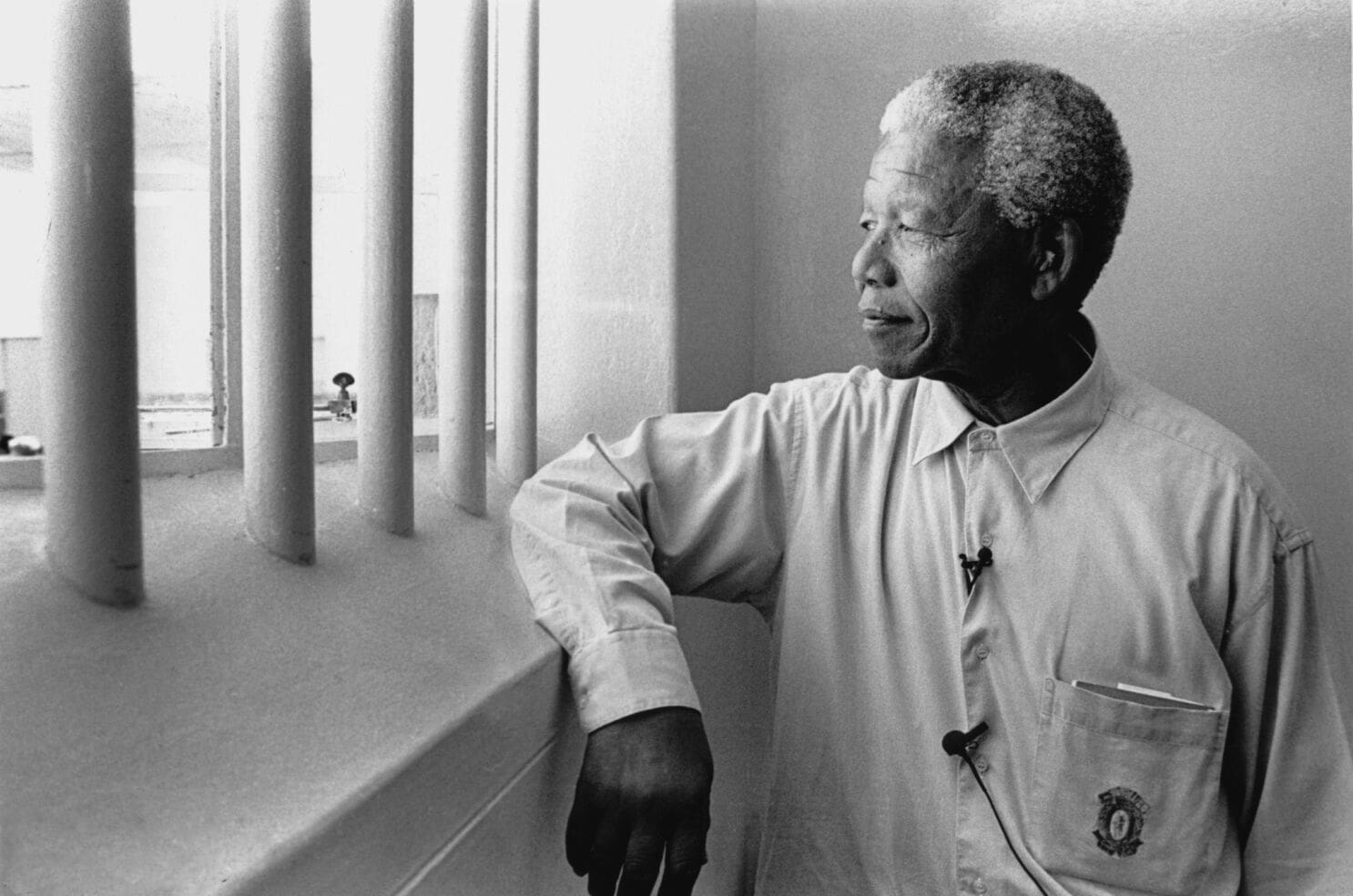
We are aware that a leader’s life leaves traces and as Nelson Mandela is one of them, his experience leaves lessons to be followed or inspirations to be adopted as a leader.
From the outset, let us remember that Nelson Mandela did not respond to violence with violence, but called for reconciliation. He had made it clear to his supporters that personal criticism does not save the Nation; and that if we do not change when circumstances recommend it we cannot expect others to do the same.
Thus the people should go beyond their understanding of nation-building. This brings us back to the understanding that violence does not always resolve a conflict, the latter can also come through non-violence, reconciliation; once we manage to surpass ourselves we can do better. He had also called for investment and the opening of markets to everyone. He did not want his country to be subdivided into classes that favored the superiority of one category of people over another on the basis of race or social background.
Certainly, he faced the challenges as president: the struggle against poverty that the years of apartheid had developed, the hunt against all forms of discrimination, and the consolidation, despite fierce opposition, of reconciliation between blacks and whites; but without becoming discouraged, he constantly reminded people that “there is no easy path to freedom because being free is not only to get rid of one’s chains, it is to live in a way that respects and strengthens the freedom of others.
From this, we understand that courage is very important in the struggle and in the face of the different challenges we may face. Regardless of the obstacles in front of him, he was able to pursue his goals without tiring; for him, the important thing was not to find the immediate answer to the problem that arose but to reassure himself that he had taken his time to make the right decision.
For him, the new freedom should not be at the expense of the former oppressor, otherwise it would be useless; this is where he resorts to his second principle saying that we must not move away from our enemy but rather keep an eye on him in order to better monitor all his maneuvers, and even when he is about to shoot at us, we will know when he is about to load his weapon.
“I’m not really free if I take away someone else’s freedom. The oppressed and the oppressor are both dispossessed of their humanity,” he says. From this, we understand that a leader is not someone who seeks solutions that are favorable to him alone, but who ensures that even those who do not share his vision, even those who work night and day to fight it, can find their part.
Nelson Mandela is a person who has brought forgiveness and reconciliation throughout the nation, and is also presented as an “embodiment of non-violence on a global scale”. His willingness to be reconciled with those who persecuted him the most is a mark much appreciated; African humanist ethics and philosophy characterized him. He thus embodied the still least weak humanism.


Leave a Reply